
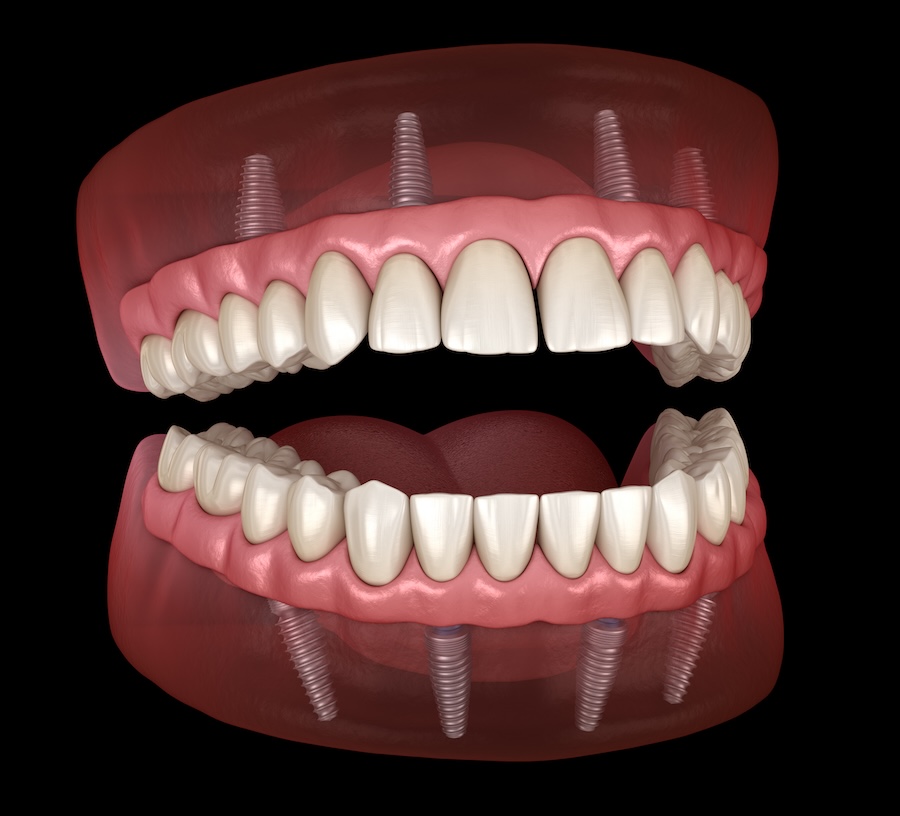
Losing many—or all—of your teeth takes more than just a chunk out of your smile. It can touch how you eat your favorite meals, how you talk to friends, how your face changes over time—and yes, even how you feel about yourself. At Hooks Family Dentistry in College Station, TX, Dr. Ryan Hooks meets a lot of people ready for more than “good enough”—they want better. That’s where implant‑supported dentures come in. Let’s walk through why they’re worth considering, and what the journey looks like.
Why Think About Implant‑Supported Dentures?
Regular dentures have done a lot of good, but they’re not perfect. When you don’t have anything anchoring your new teeth to your jaw—like natural roots or implants—things can shift. The denture might move when you laugh, rub when you bite down, and even trigger sore spots. Plus, with less stimulation to the jawbone, bone loss can speed up, changing how your denture fits and how your face looks.
For some folks, implant‑supported dentures are the upgrade that fixes those issues. Implants act like artificial roots, giving the denture something solid to snap onto—or in some cases fully replace the removable denture with a permanent bridge. What does that feel like?
- Sturdy fit: You can eat, laugh, and speak without wondering if your teeth will move.
- Better bite: Implants or denture attachments give you more strength—so you can enjoy food again.
- Protect the bone: Because the jaw is “used” again, it stays healthier and more stable.
- Smile with certainty: When your teeth feel secure, you stop thinking about them—and start just living your day.
What the Treatment Plan Looks Like—Step by Step
You’re not signing up for a one‑visit fix. Implant‑supported dentures require thought, coordination, and time—but the rewards are worth it. Here’s the path Dr. Hooks and our team walk with you:
- Consultation and imagery: We’ll get to know your goals and check your gums, jawbone, and overall oral health with scans and X‑rays.
- Prepare the site: If your jawbone or gums need a little help, that comes next—grafts or treatments might be recommended to make sure your implants have the best foundation.
- Implant placement: The implant posts go into the jaw. We’ll walk you through what to expect immediately after—so you’re ready.
- Healing time (osseointegration): The implants fuse into your jawbone over a few months. Many patients wear a temporary denture during this time so there’s no big pause in life.
- Attach the final denture: Once healing is complete, the permanent denture or fixed arch gets placed. We fine‑tune the fit, make sure everything feels natural, and that you’re ready to go.
- Ongoing care: Implants need good home care and regular checkups—just like the rest of your teeth.
What to Expect in Terms of Time, Comfort & Results
Each person’s path is a little different, but here’s a general idea of what people say:
- Timeline: It can take around 3–6 months or more, especially if your jawbone needs preparation.
- Comfort: After the implant procedure, you might have some swelling or tenderness, but it’s usually manageable with rest and pain relief.
- Eating & lifestyle: Early on, you’ll likely stick to softer foods while healing. Once the final denture is in, many patients say it feels as natural as anything they’ve worn before.
- Long‑term payoff: Compared to traditional dentures, implant‑supported versions offer more stability, comfort, and fewer surprises.
Ready to Feel More Confident With Your Smile?
If you’re dealing with loose dentures, tired of relying on adhesives, or just want a solution that feels solid—implant‑supported dentures might be the right move. At Hooks Family Dentistry, Dr. Ryan Hooks and our team want to help you make an informed decision—no rush, no pressure, just care tailored to you. Let’s talk about your goals, map out your path, and get you back to a smile that doesn’t just work—but feels right too.
Contact Us