
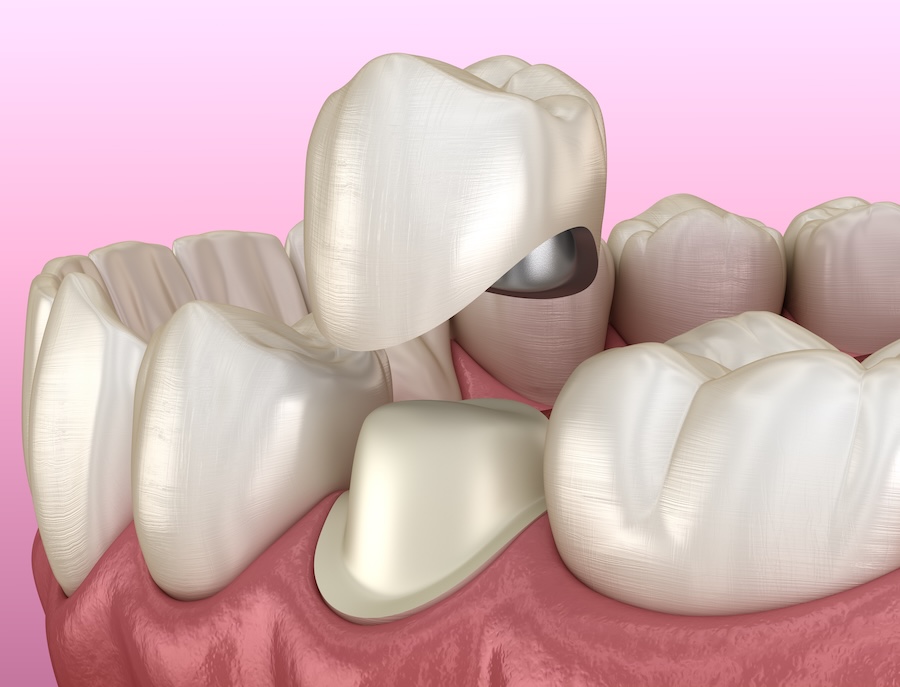
If you’ve run your tongue along a crown and felt a sharp edge, rough spot, or slight ridge, it can quickly become distracting. Even a small irregularity can rub against your tongue or cheek and make you wonder whether something is wrong.
The good news? In many cases, yes — a dentist can smooth out a sharp crown edge safely and comfortably.
At Hooks Family Dentistry in College Station, TX, Dr. Ryan Hooks evaluates concerns like this regularly. Here’s what causes a crown to feel sharp and what can be done to fix it.
Why Would a Crown Feel Sharp?
Dental crowns are designed to feel smooth and natural. But there are a few reasons one might develop a sharp edge or rough area:
- Minor surface irregularities: Sometimes a crown simply needs slight polishing. Small edges can be adjusted quickly in the office.
- Cement residue: After placement, a small amount of cement may remain near the gumline. Smoothing this area can improve comfort.
- Bite adjustment changes: If your bite has shifted slightly or the crown was recently adjusted, you might notice an edge that wasn’t obvious before.
- Wear or chipping: Over time, crowns can develop small chips or rough spots.
- Gum recession: If gums recede, areas of the crown that were previously covered may feel more noticeable.
A sharp sensation does not automatically mean the crown has failed. Often, the solution is simple.
Can It Be Smoothed?
In many situations, yes.
Dr. Ryan Hooks can often polish or contour the crown using specialized dental instruments. This process:
- Smooths rough edges
- Refines small ridges
- Improves comfort against the tongue or cheek
- Requires only a short appointment
The adjustment focuses on the crown surface — not the natural tooth underneath.
When Is More Than Smoothing Needed?
While most sharp crown edges can be adjusted, there are times when replacement may be recommended.
Examples include:
- A crack running through the crown
- The crown margin lifting from the tooth
- Decay forming underneath
- A significant chip affecting structure
An exam — and possibly X-rays — will determine whether smoothing alone is appropriate or if further treatment is needed.
Should You Wait or Schedule a Visit?
If a crown feels slightly rough but isn’t painful, it is still worth having it evaluated. Sharp edges can irritate soft tissue over time and lead to soreness.
Schedule an appointment if you notice:
- Persistent irritation on your tongue or cheek
- Pain when biting
- Sensitivity near the crowned tooth
- A visible crack
Early adjustments are typically simple and quick.
How Long Does Crown Smoothing Take?
Most smoothing or polishing adjustments take only a few minutes once you are in the chair. Many patients are surprised by how straightforward the process is.
You will usually leave with a noticeably smoother and more comfortable crown.
Can a Dentist Smooth Out a Sharp Crown Edge in College Station, TX?
If you’ve noticed a sharp or rough edge on a dental crown, Hooks Family Dentistry in College Station, TX can evaluate it and determine whether a quick adjustment will resolve the issue.
If something more involved is present, you will receive clear guidance on next steps. Schedule a visit to restore comfort and ensure your crown continues to function properly.
Contact Us